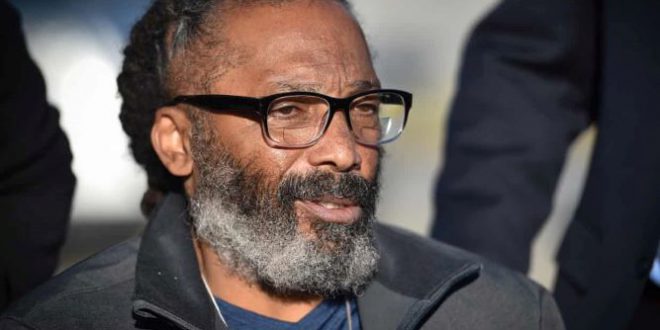
It’s been more than two weeks since Kevin Strickland was released from the Western Missouri correctional center and now he often wakes at 3.30 am, long before the dawn, with an urge to get outside.
For 43 years of a sentence under a former Missouri law known as the “Hard 50” – which required Strickland to serve at least 50 years before he would be eligible for parole – that was an impossibility.
But on 23 November, Strickland, 62, was discharged from the state’s custody, ending his incarceration for a 1978 triple murder he always maintained – and local prosecutors and Kansas City officials now agree – he did not commit. Now he’s waking at his brother’s place.
“I’m waking up anxious to get outside,” Strickland told the Guardian at his lawyer’s 38th floor office in Kansas City, the Great Plains out spread out across the arc of the windows. “I want to know and feel light. Three o’clock in the morning, I’m ready. Time to go. I don’t know where I’m going but I know it’s time to go.”
In the moment that Strickland walked free, he was Missouri’s longest serving inmate. His conviction for the murders of Sherrie Black, 22, Larry Ingram, 21, and John Walker, 20, during a home invasion largely rested on the eyewitness testimony of the sole survivor of the crime, Cynthia Douglas.
Douglas recanted her testimony in 2009, saying she had been pressured by prosecutors to identify Strickland, a Black man who was then 18 years old. But until his case was taken up by the Midwest Innocence Project, which was joined in an effort to overturn his conviction by Jackson county prosecutor Jean Peters Baker, there was little Strickland could do.
“You can’t even imagine – and you don’t want to,” Strickland says of his incarceration. “It’s tough to be told when to do things every day. When to lay down. Eat. Sleep. Play. And to know those things are going to repeat day after day after day so long as you keep living – and that it’s not going to change.”
“You’ve just got to go through it. It’s dark. I didn’t check out. You have to face it. Deal with it. I’ve seen several suicides, so that would be an indication their will and strength had been compromised.”
Strickland, who is confined to a wheelchair until his spinal stenosis is treated, has become in many ways an example of criminal justice inequities, and not just in the circumstances of his conviction – no physical evidence tied him to the crime scene; an all-white jury came back after two hours, though he recalls 15 or 30 minutes. “They sure didn’t waste any time,” he says.
It’s tough to be told when to do things every day. And to know those things are going to repeat so long as you keep living
 ionigeria.com Nigerian Newspaper (Online)